
 Photoshop
 Maya
Maya ZBrush
 Houdini
 Substance Painter
 Blender
 Unreal Engine
 Arnold
 Nuke
Nuke KeyShot
 V-Ray
V-Ray Mari
Mari Marvelous Designer
 Marmoset Toolbag
 Substance Designer
 3ds Max
 3DCoat
 Redshift
 Faceform Wrap
 Lightroom
 After Effects
 OctaneRender
 SpeedTree
 Daz 3D
 Agisoft Metashape
 Fusion
 Modo
Modo RealityCapture
 Gaea
Gaea Cinema 4D
 Gravity Sketch
 Premiere
 Procreate
 Clip Studio Paint
 SketchUp
 SketchBook
 Katana
 Natron
 Mudbox
 Quixel Bridge
 Quixel Megascans
 Quixel Mixer
 Substance 3D Modeler
 World Creator
 Yeti
Yeti Ziva VFX
 Mixamo
 Adobe Medium
 Quixel DDO
 xNormal
 Meshmixer
 Storyboard Pro
 DaVinci Resolve
 TreeIt
 World Machine
 Gaffer
 Corel Painter
 SynthEyes
 Krita
Krita Massive
 Materialize
 Unity
Unity Ornatrix
 PreForm
 Moi 3D
 animBot
 QuickTime
 ReCap
ReCap








10 Lessons
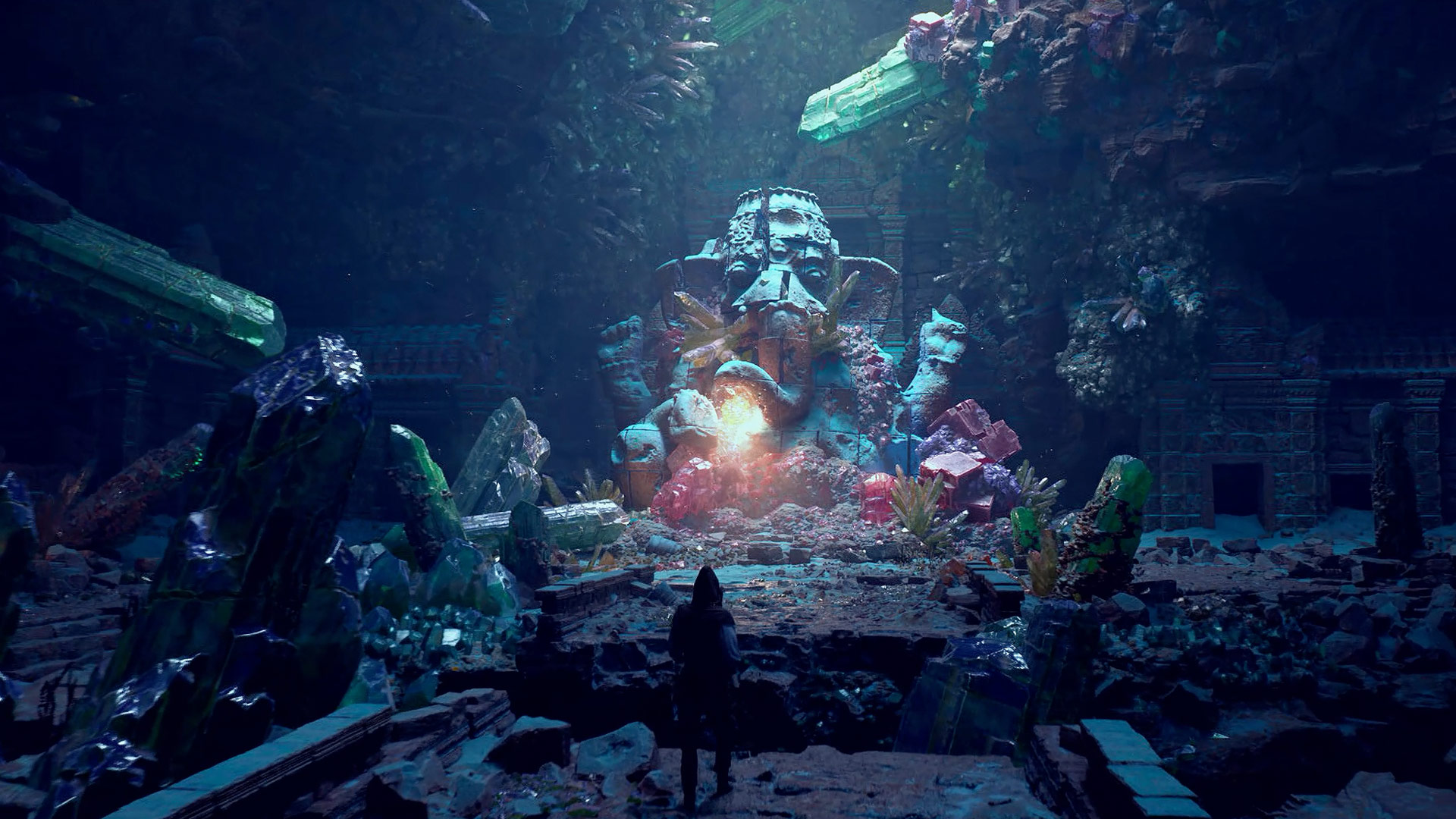
Brian introduces his workshop, which presents a practical, industry-tested approach to creating modular game environments that emphasize efficiency and collaboration. Rather than focusing on individual asset complexity, he demonstrates how to maximize visual impact through smart modular design, material blending, and strategic workflows that mirror real AAA production pipelines. The overarching lesson is that creating compelling game environments at a professional level requires not only technical skill but also efficient planning, team coordination, and understanding how to achieve maximum quality within the time and resource constraints of modern game development.
Duration: 10m 51s

This lesson emphasizes the critical importance of thorough reference gathering and organization in the environment art pipeline. By systematically breaking down inspiration into categories and identifying modular components before beginning production, artists can work more efficiently and maintain visual consistency. Brian’s approach of combining realistic reference with a unique supernatural element demonstrates how to balance technical learning goals with creative storytelling, resulting in more compelling and memorable environment art.
Duration: 10m 36s

This lesson demonstrates that creating compelling 3D environments begins with proper technical setup and a disciplined blocking-out methodology. Brian's emphasis on working modularly with consistent pivot points and grid alignment, while maintaining proper scale through reference figures, provides a solid foundation for creating production-ready assets. Though the shapes used are simple, their thoughtful arrangement and repetition can create convincing, complex environments when combined with proper lighting and materials in the final stages.
Duration: 45m 25s

This lesson emphasizes the importance of testing and iteration during the blockout phase before committing to final modeling. By establishing proper pivot points, maintaining organized file structures, and validating grid alignment in the target engine early, artists can efficiently identify and correct issues. Brian's demonstrated pipeline between 3ds Max and Unreal Engine provides a solid foundation for environment art production, ensuring assets work correctly in-engine before investing time in high-resolution modeling and texturing.
Duration: 14m 14s

This lesson demonstrates a practical, hybrid texturing workflow that balances speed with quality. While Brian acknowledges that traditional Photoshop-based techniques are becoming obsolete, they remain valuable for rapid prototyping and planning. The real revelation is how quickly Substance Designer can be learned and applied to create production-quality materials with unprecedented flexibility. The key takeaway is that modern game environment artists benefit from knowing when to use quick traditional methods for planning and when to invest time in procedural tools for final assets, while maintaining technical consistency across different software platforms.
Duration: 43m 32s

This lesson demonstrates a production-focused approach to creating modular game environments that balance quality with efficiency. By using simple modeling techniques, smart instancing workflows, real-time rendering feedback, and powerful UV-mapping scripts, Brian shows how environments can be built in relatively short timeframes while maintaining professional results. His emphasis on practical solutions over perfectionism reflects real-world constraints in game development and makes this workflow accessible to intermediate 3D artists looking to create believable, ship-ready game environments.
Duration: 14m 8s

This lesson demonstrates a rapid photogrammetry pipeline that prioritizes speed over perfection, completing a scanned asset in roughly two hours from capture to final implementation. While Brian acknowledges cutting corners at this stage — and will later discuss improvements during a post-mortem — his workflow demonstrates that functional photogrammetry assets can be created efficiently using Reality Capture, ZBrush, and Substance Painter. His approach is particularly valuable for organic or detailed objects where manual modeling would be prohibitively time-consuming.
Duration: 5m 1s

This lesson presents a rapid-prototyping approach to creating complex organic growth effects that prioritize visual impact over optimization. While the resulting asset is too heavy for actual game production, it effectively demonstrates the artistic vision and storytelling potential of environmental overgrowth. Brian emphasizes that this is a method meant to quickly communicate a concept and acknowledges that a production-ready version would require significant optimization through reduced geometry, better UV packing, and supplementary texture cards.
Duration: 7m 11s

This lesson provides insight into the iterative, time-intensive nature of professional material creation and environment art. Brian emphasizes that achieving natural-looking material blending requires careful artistic control, strategic buildup in logical locations, and significant refinement time. While his modular approach offers flexibility and his vertex-painting technique provides powerful variation tools, his work demonstrates that technical knowledge must be balanced with artistic restraint and an understanding of when "good enough" meets project constraints rather than ideal polish standards.
Duration: 20m 16s

This project served as a valuable learning experience that highlighted the importance of proper planning and tool use in creating a 3D environment. While Brian is satisfied with both the V-Ray and Unreal Engine versions, he discusses potential areas for improvement, particularly in adopting more procedural workflows, optimizing geometry, and enhancing environmental storytelling. He also explains that the experience motivates him to explore Substance Designer more extensively for future projects and to develop better technical skills with Unreal's Blueprint system.
Duration: 9m 23s

Primary tools
For this workshop you’ll need:


* Note that these programs and materials will not be supplied with the course.
Skills Covered
Who’s this Workshop for?
This workshop is designed for intermediate to advanced environment artists and 3D generalists working in game development, film, or architectural visualization. Artists should have foundational knowledge of 3ds Max, Unreal Engine, and basic texturing workflows to fully benefit from the advanced techniques covered.
Aspiring environment artists, level designers, and technical artists will also find tremendous value in learning Brian's modular approach to scene creation. The workshop teaches efficient production methods that maximize asset reuse while achieving visually complex results, making it essential for anyone looking to streamline their environment art pipeline.
Learning Outcomes
By completing this workshop, artists will have mastered a complete modular environment pipeline from initial concept through final rendered output.
Key skills include:
- How to gather and analyze reference material for effective environment art production planning.
- How to create modular blockouts and assets in 3ds Max for efficient scene assembly.
- How to test and iterate blockout geometry effectively within Unreal Engine's real-time environment.
- How to develop custom textures and materials using Substance Designer for modular asset workflows.
- How to implement photogrammetry techniques using Reality Capture for realistic environmental elements and surfaces.
- How to sculpt organic environmental details and props using ZBrush's advanced modeling tools.
- How to assemble final scenes with professional lighting, post-processing, and V-ray Next rendering techniques.


